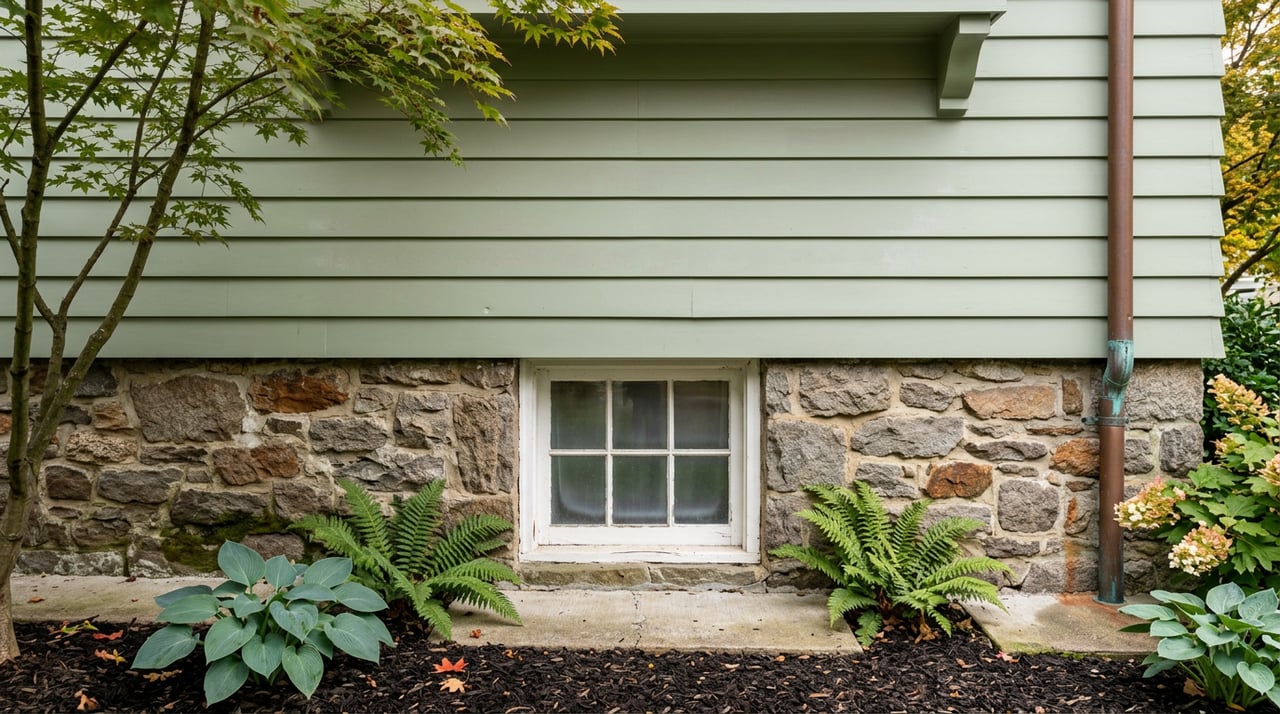
Ten days before closing, the inspection report lands. On a Craftsman a few blocks off 15th, that report tends to open with a familiar refrain: an old fill pipe cap discovered behind the foundation planting, a sewer scope showing root intrusion in the clay line running to the street, and a panel photo confirming that knob-and-tube still feeds two of the upstairs bedrooms.
Three separate findings. Three separate line items for negotiation. Except they are not separate at all. They are the same story told three times, because they were installed by the same builder in the same decade for the same house.
That is the thing most guides to old-home disclosure miss. They walk through oil tanks, sewer lines, and wiring as though a seller might encounter one and get lucky on the other two. On Capitol Hill, where the housing stock still standing was largely built between 1900 and the 1930s, these three systems arrived together and they tend to surface together. Understanding that changes how a seller should approach the sale, because the problem is not any single system. It is the aggregate a buyer's lender and inspector will see all at once.
Why the Same House Has All Three
Capitol Hill's build-out has a fairly specific timeline. James Moore began developing 160 acres on the hill in 1900, and the stretch of 14th Avenue E south of Volunteer Park earned the nickname Millionaire's Row, or the Avenue of Mansions, as the neighborhood's earliest and grandest homes went up. The Harvard-Belmont Landmark District on the hill's west slope, designated a city landmark in 1980, preserves a run of early twentieth century residential architecture built primarily between 1905 and 1930, including the Georgian Revival R.D. Merrill House from 1908. Further out from those blocks, the more modest Craftsman bungalows and Seattle Boxes that make up much of the neighborhood's single-family fabric went up on the same general timeline.
That window matters for one practical reason. Heating oil was the dominant fuel source for Seattle homes from roughly the 1920s through the 1960s, and the same houses that were plumbed for oil heat were wired with knob-and-tube and connected to the sewer main with clay or concrete side sewer pipe, because that is simply what was available when the house was built. A home never converted, or converted decades ago without a paper trail, is a reasonable bet to carry more than one of these conditions rather than just one.
The Oil Tank Nobody Remembers Installing
Washington's standard seller disclosure form asks directly about underground oil tanks, and that question does not go away just because the tank was decommissioned years ago. Sellers are required to disclose what they actually know, and a "don't know" answer on a pre-1970 home is worth investigating rather than assuming away.
The cost spread here is wide enough that it changes the conversation depending on which end of it a seller lands on. Decommissioning a tank in place, with no contamination found, typically runs $700 to $1,000. Full excavation and removal without contamination runs $5,000 to $10,000. Once contamination is confirmed and soil remediation is required, costs climb to $10,000 to $15,000 for a typical case, and complex scenarios have exceeded $100,000.
| Scenario | Typical Cost |
|---|---|
| In-place decommissioning, no contamination | $700 to $1,000 |
| Full removal, no contamination | $5,000 to $10,000 |
| Removal with soil remediation | $10,000 to $15,000 |
| Complex contamination cases | $15,000 to $100,000+ |
Washington's Pollution Liability Insurance Agency runs a Heating Oil Loan and Grant Program that has provided up to $75,000 per applicant in past cycles, including up to $60,000 specifically for cleanup costs. This spring's application window ran May 4 through June 18, 2026, and it is worth watching for the next one, since it is a resource most sellers never learn exists until they are already mid-negotiation.
The Paperwork Changed in October
Seattle homeowners own their side sewer line all the way from the house to the city main, and the city has been explicit that its own maintenance responsibility stops well short of that. Seattle Public Utilities operates and maintains over 1,400 miles of city sewer pipe, while Seattle customers are collectively responsible for more than 4,500 miles of side sewer pipe on private property.
As of October 1, 2025, Seattle Public Utilities took over all side sewer permitting, plan review, and inspection from the Seattle Department of Construction and Inspections. That shift is recent enough that a fair amount of contractor advice and older guidance still points sellers toward SDCI, which is the wrong door now. For a Capitol Hill home with a century-old clay or concrete line, the practical takeaway is the same as it was before the paperwork moved: a video sewer scope ahead of listing tells you what a buyer's inspector is going to find anyway, on your timeline instead of theirs.
The Insurance Market Tightened This Year
Knob-and-tube wiring shows up in homes built from the 1880s through the 1940s, which describes a large share of Capitol Hill's older single-family stock. The wiring itself is not automatically a code violation, and Washington's electrical code still contains provisions addressing existing knob-and-tube rather than banning its presence outright.
Insurance is where the pressure actually lands, and 2026 has been described by electrical contractors working these homes as one of the most restrictive years yet for coverage. Some carriers are issuing flat refusals to insure a home with active knob-and-tube. Others will write a policy but require full replacement within a defined window after closing, sometimes as short as 30 days, before coverage takes effect. FHA and VA financing frequently stalls or fails outright once an appraisal or inspection flags active knob-and-tube, which narrows the buyer pool for a listing before an offer ever comes in.
None of that means a home with knob-and-tube cannot sell. It means the seller who already knows the condition and has priced it, or already has an electrician's inspection report in hand, is negotiating from a very different position than the seller who is hearing about it for the first time from a nervous buyer's agent.
What This Actually Changes About the Deal
The strategic point is not that any one of these three items is disqualifying. It is that they show up as a set on older Capitol Hill homes, and buyers and their lenders read them as a set too. A report that surfaces one unresolved oil tank question, one sewer scope with root intrusion, and one electrical panel with visible knob-and-tube does not read to a buyer as three manageable items. It reads as a house that has not been looked at closely in a long time, and buyers price that uncertainty into their offer far more aggressively than they price a single known repair.
That is exactly why a pre-listing inspection, a sewer scope, and a decommissioning check before a home ever hits the market do more than satisfy disclosure requirements under Washington's Seller Disclosure Act. Washington law requires sellers to complete a standard disclosure statement covering title, water, sewer and septic, structural, systems, and HOA issues, based on actual knowledge, and to deliver it to the buyer within five days of mutual acceptance. Once the buyer receives it, they have a three-day window to rescind for any reason. Every one of these old-house conditions is going to surface in that window one way or another. The only real choice a seller has is whether it surfaces as a known number they set, or as a surprise the buyer's side gets to name the price on.
We spend enough time in Capitol Hill's older housing stock to know which of those two conversations sellers would rather have. Combining a construction background with Compass-enabled marketing means a listing can go to market with the tank question already answered, the sewer line already scoped, and the wiring already assessed, so the only negotiation left is the one you started.
A Few Questions Worth Answering Directly
Do I have to disclose an oil tank that was decommissioned years ago? Yes. The disclosure question covers the existence of an underground tank, not just whether it is currently in use, and a decommissioning certificate should be kept and handed to the buyer if one exists.
Does knob-and-tube always have to be replaced before closing? Not automatically. Its presence does not violate code on its own, but insurers and lenders can require replacement as a condition of coverage or financing, which functions the same way in practice.
Who is actually responsible for the side sewer line under a Capitol Hill house? The homeowner, all the way to the city main. Seattle Public Utilities maintains the main lines but the connecting pipe under private property is the owner's responsibility to repair and disclose.
How soon does a seller have to provide the disclosure statement? Washington law sets a five-day window from mutual acceptance, though many sellers and their agents prepare it before the home is ever listed so there is nothing left to scramble for.
If you are weighing a sale on Capitol Hill, or looking at one of these older homes as a buyer trying to understand what you are actually taking on, Stanford Group can walk the property with you and put real numbers behind what the inspection is likely to find before it finds you first. Request a personalized market and renovation consultation and let's look at the house honestly, before a buyer's inspector does it for you.