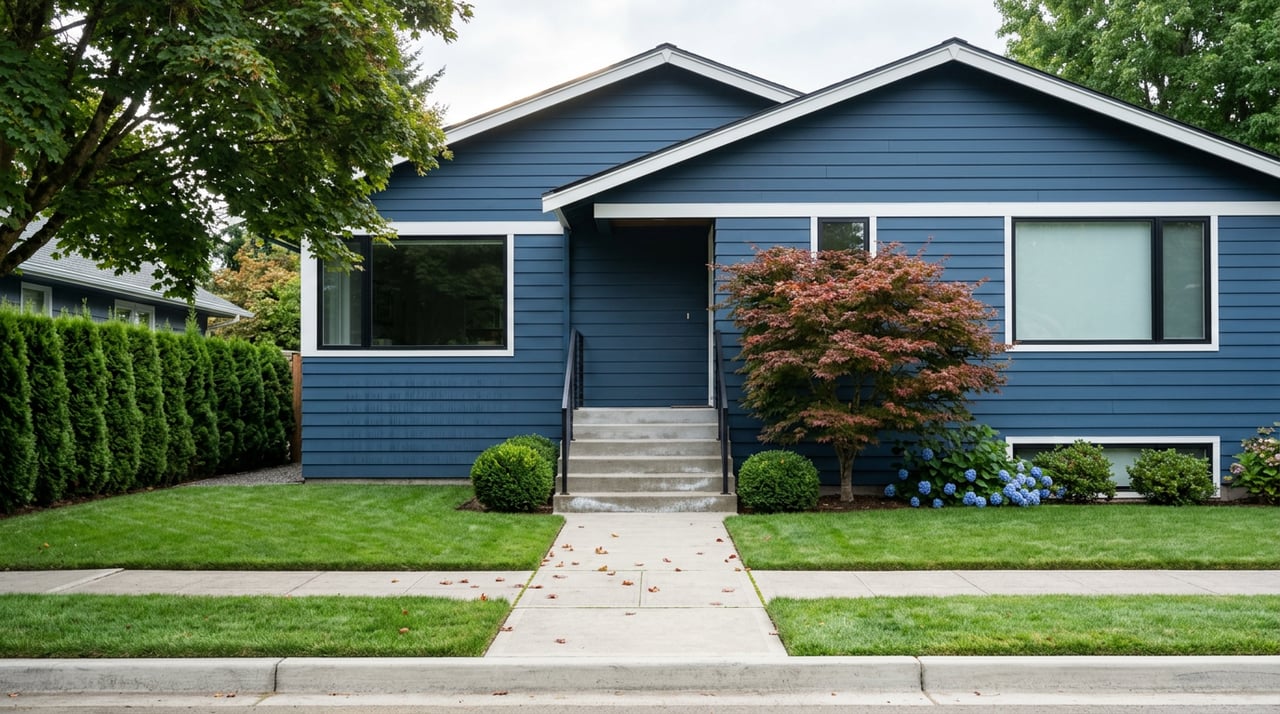
Every write-up about Phinney Ridge this year has told the same story: a sleepy strip of bungalows and dog walkers turned, almost overnight, into one of Seattle's better food corridors. Sophon and Lioness anchor a shared building near the top of the ridge. ZooTunes packed the meadow behind Woodland Park Zoo all summer. A new pizzeria was supposed to fill the corridor's last obvious gap. That version of the neighborhood is true, and it is also the version that photographs well in June.
The more useful question is what the corridor looks like now, in the six or so weeks after the Art Walk crowds go home and before the zoo's next big draw shows up. That gap is where a food scene either holds or reveals itself as a seasonal performance. Right now, walking Phinney and Greenwood Avenues, you can watch that test happen in real time, and one storefront in particular is still an open question.
The Corner Everyone Said Would Be Full by Now
The former Zeek's Pizza space at 6000 Phinney Ave N has been earmarked for more than a year as Stevie's Famous Pizzeria's third Seattle location, following the original in Burien and a second built into Beacon Hill's Clock-Out Lounge. Owners Shane Abbott and Justin Harcus have described the Phinney build-out as their largest room yet, with a patio and something rare on this stretch of the corridor: a dedicated parking lot.
The pitch is easy to understand. Stevie's built its reputation on a sourdough crust and a house pie, the Normie Macdonald, dressed in coppa, burrata, and hot honey, and Seattle Times readers have voted it the city's best pizza. Local food coverage has repeatedly flagged the address itself as the interesting part of the story, because 6000 Phinney sits at the exact hinge point between the residential blocks north of the zoo and the restaurant cluster to the south. It is the spot a person grabs a slice on the way to a show, or a can of beer on the way home from one.
The most recent coverage on the project, published in mid-July, still described the opening as a "summer 2026" target rather than a fixed date. Nothing since has updated that. Which means the corner most people expected to be finished by Labor Day is, as far as the public record shows, still a build-out. That is not a criticism of the project. Construction timelines slip everywhere, and a room this size with a patio and a parking lot is not a quick tenant improvement. But it does mean the corridor is heading into the quiet season with its most anticipated addition still unopened, which changes what "proven" actually means here this fall.
What the Art Walk Leaves Behind When It's Over
The PhinneyWood Art Walk turned 30 this year, and the Phinney Neighborhood Association marked the anniversary with its usual two-day format: a Friday evening preview from 6 to 9 p.m. and a full Saturday from noon to 5, spread across roughly 40 pop-up venues along Greenwood and Phinney Avenues. For one weekend in mid-August, cafes, pubs, shops, and studios along the spine hosted local artists working in ceramics, photography, fiber, and glass, and the restaurants along the route ran Art Walk specials to match the foot traffic.
That kind of weekend is a gift to a food corridor. It puts hundreds of people on the sidewalk who might not otherwise walk past a given restaurant's door, and it gives new or under-the-radar spots a low-stakes way to get discovered. But it is also, by design, a single weekend. Once the pop-up galleries pack up, the sidewalk traffic that carried August goes with them, and whatever business the corridor does in September and October has to come from people who live here choosing to walk down and eat, not from an event pulling them there.
A concert or an art walk fills a sidewalk one night at a time. What a neighborhood's restaurants actually earn is what happens on the ordinary Tuesday after the event ends.
A Noticeably Thinner Card at the Zoo
Woodland Park Zoo's BECU ZooTunes series ran the meadow hard this summer, with ticketed outdoor concerts stacked through June, July, and into August, several weeks carrying two acts in a single night. That kind of recurring, weekly draw is exactly the sort of thing that trains a neighborhood's dining habits: people grab dinner before the show or a drink after, week after week, and restaurants along Phinney Avenue can more or less count on it.
The zoo's next headline event is a different animal entirely. Wild Night Out, the zoo's annual conservation fundraising gala, returns September 30 and will honor photographer Art Wolfe with the zoo's Conservation Voices Award. It is a meaningful evening for the institution and its conservation partners, but it is a single ticketed gala, not a summer's worth of recurring foot traffic. The zoo will still draw its usual pumpkin-and-costume crowd toward the end of October, but between now and then there is no equivalent to a Thursday-night concert pulling people down the hill toward dinner. The corridor's restaurants are, for the next several weeks, largely on their own.
The Two Restaurants Already Carrying the Weight
If Stevie's is the corridor's open question, Sophon and Lioness are its answer key. Both opened inside the same building near the top of the ridge, and both have spent more than two years proving they can pull diners from across the city on an ordinary weeknight, not just during a festival weekend.
Sophon grew out of a pandemic-era takeout menu at the adjacent cocktail bar Oliver's Twist, where owner Karuna Long started serving the Cambodian dishes he grew up with. That menu eventually earned its own room next door, and the restaurant has been transitioning fully into that expanded identity, adjusting to crowds that showed up from day one. Lioness, from Renee Erickson, runs walk-in only with just eight tables, and still manages to keep a line moving for a meatball diners describe as the reason to wait.
Neither restaurant needed an art walk or a concert series to prove itself. That is the bar Stevie's will be measured against once its doors open, and it is also the bar the whole corridor is quietly being measured against right now, in the weeks with no event on the calendar at all.
If You Want to See the Shoulder Season for Yourself
The easiest way to understand what a neighborhood's food scene actually is, rather than what its busiest weekend made it look like, is to walk it on a night with nothing going on. A few ways to do that on Phinney Ridge over the next month:
- Walk Phinney Avenue on a weeknight in late September, when there is no concert at the zoo and no Art Walk banner on the light poles, and note which restaurants still have a line.
- Check the former Zeek's Pizza space at 6000 Phinney Ave N in person. Permits and construction signage tend to say more than a press release about how close an opening actually is.
- Stop by Sophon or Lioness on an ordinary Tuesday rather than a weekend, since that is the truest test of whether a restaurant's reputation survives without a crowd pulling people there.
- Watch the zoo's calendar for its late-October Halloween programming, which tends to be the next real foot-traffic event after Wild Night Out and before the corridor settles into its quieter winter rhythm.
The Quiet Weeks Are the Real Report Card
None of this is a knock on Phinney Ridge. A neighborhood that can carry its restaurant reputation through a stretch with no festival, no concert series, and its most anticipated new pizzeria still under construction is a neighborhood with real depth, not a summer mirage. The point is simply that the proof was never going to show up in July. It shows up now, in the ordinary weeks nobody writes about, when Sophon still has a wait on a Tuesday and the corner at 6000 Phinney either finally opens its doors or spends one more season as a promise.
Stanford Group works this stretch of north Seattle because we live in it too, and we tend to notice the same small shifts our neighbors do, whether that's a corner storefront finally opening or a corridor holding its own once the crowds thin out. If you are curious what any of this means for a home on the ridge, or simply want a second set of local eyes before you make a move, Stephanie and Matt Stanford are always glad to talk it through. You can also request a personalized market and renovation consultation whenever the time feels right.