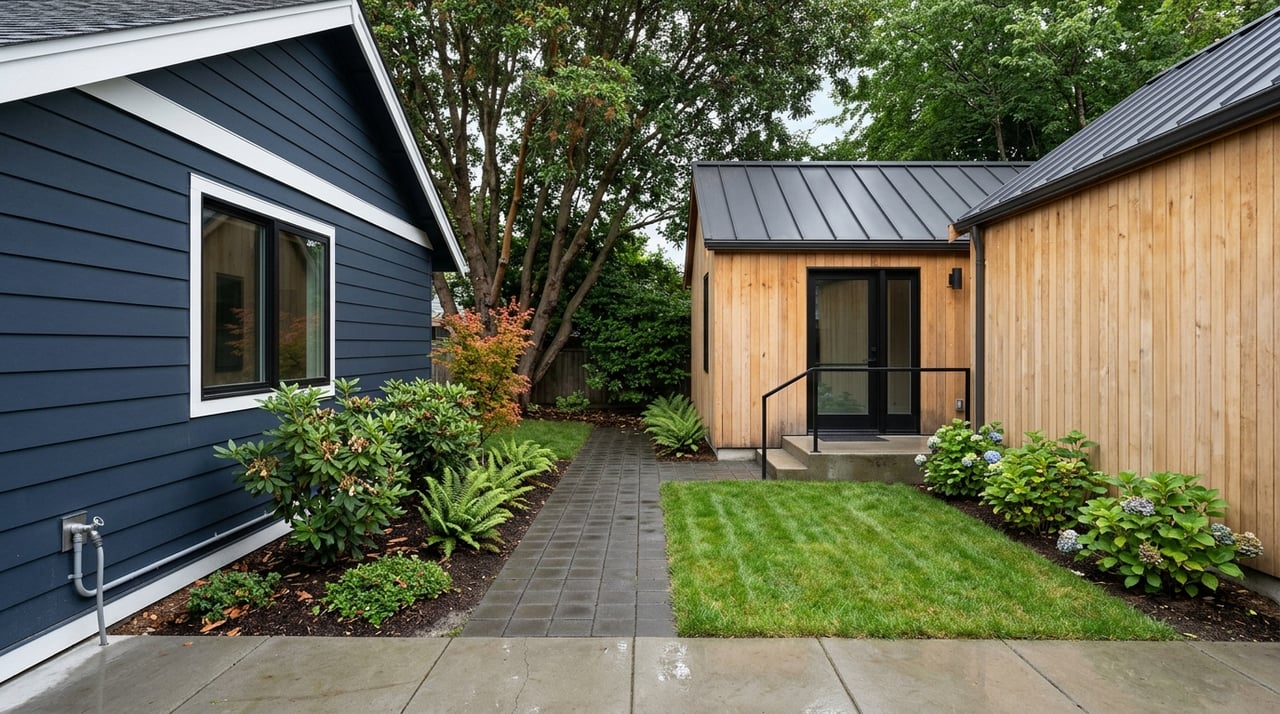
If you are eyeing a Northeast Seattle home because of its future potential, you are not alone. In areas like Bryant, Ravenna, and Wedgwood, many buyers and homeowners are thinking beyond the current floor plan and asking whether a remodel, basement conversion, or detached ADU could create better long-term value. The good news is that Seattle’s current rules open more options than many people realize, but the details still matter. Let’s dive in.
Why ADUs Matter More Now
Seattle updated its ADU standards in 2025, and the changes are meaningful for homeowners and buyers planning ahead. According to the City’s ADU and middle housing summary, ADUs are now allowed citywide wherever residential development is allowed, and you can have up to two ADUs per lot in addition to the primary home.
That flexibility gives you more ways to think about a property. You may be able to add an attached ADU, a detached ADU, or even stack configurations depending on the site and project scope. The same update also raised the ADU size limit to 1,000 square feet, which can make these homes feel much more functional for guests, rental use, or multi-generational living.
What Seattle Allows Today
Seattle treats ADUs as legal housing units that must go through the proper permit process. The City’s ADU permit guidance explains that ADUs must comply with current building, land use, energy, mechanical, electrical, and environmental standards.
That means an ADU is not just a casual basement setup or an informal backyard structure. If you are buying with future plans in mind, you want to know whether the space can be permitted as legal living area, not just whether it looks usable today.
A few Seattle rules stand out for Northeast Seattle owners and buyers:
- Up to two ADUs may be allowed on one lot in addition to the main home
- Detached, attached, or stacked ADUs may be permitted
- ADUs can be as large as 1,000 square feet
- Owner occupancy is not required for ADUs, according to the City’s planning appendix
- Parking, street improvements, and MHA contributions do not apply to ADUs under current city guidance
For many buyers, that owner-occupancy point is especially important. It means a property may work as a longer-term investment or flexible housing asset even if you do not plan to live on site.
Best NE Seattle ADU Candidates
Not every lot offers the same path. In Northeast Seattle, the strongest ADU candidates are usually the ones with fewer physical and permitting complications.
A property may be especially promising if it has:
- An existing detached accessory structure that could be converted
- Alley access
- A relatively straightforward lot without steep slopes or critical-area issues
- Enough room to support the intended design and access needs
Seattle’s planning documents note that an existing accessory structure can sometimes be converted to a DADU even when some lot coverage and setback standards would otherwise be challenging. The City also notes that where an alley exists, a DADU may be located on the alley lot line in certain situations. Those details can make a big difference when you are comparing similar homes in Bryant, Ravenna, or Wedgwood.
Existing Structures Can Be a Big Advantage
If a property already has a garage, studio, or other detached structure, that can be one of the most appealing starting points. Seattle’s code allows conversion of an existing accessory structure to a DADU notwithstanding some lot coverage and yard or setback provisions, as outlined in the City’s amended planning chapter.
That does not mean every old structure is automatically simple to convert. You still need to evaluate condition, utilities, code compliance, and permitting. But from a real estate perspective, an existing structure can lower site friction and make the opportunity more attractive than an empty yard that needs a fully new build.
Site Risks to Check Early
Before you get too attached to a remodel plan, it is smart to screen for site constraints. In Seattle, environmentally critical area conditions can change both your timeline and your budget.
The City’s construction permit guidance says projects involving steep slopes, slide-prone areas, wetlands, flood-prone areas, or other critical conditions may require extra review. In some cases, geotechnical reports, pre-application site visits, or additional waivers and exemptions may be needed before the project can even move forward.
This is why parcel-level research matters so much. A house may look like a great remodel candidate from the street, but the permit path can tell a very different story.
Remodel, AADU, or DADU?
One of the biggest planning questions is what type of project you are really considering. The answer affects both budget and timeline.
A cosmetic refresh is very different from creating a legal dwelling unit. Seattle notes that some simpler additions or alterations may qualify for a quicker subject-to-field-inspection permit, but adding a dwelling unit or another story requires a regular building permit.
In practical terms, your options often look like this:
| Project Type | Typical Complexity | Budget Direction | Notes |
|---|---|---|---|
| Basement finish without new dwelling unit | Lower | Lower | Often the simplest way to gain usable space |
| Basement conversion to legal attached ADU | Medium | Moderate to high | Requires permitting as a dwelling unit |
| Home addition | Medium to high | High | Cost often rises with structure and finish level |
| New detached ADU | High | Highest | Adds foundation, shell, utilities, and site work |
For many Northeast Seattle buyers, a basement conversion is the most approachable path to adding legal living space. A detached ADU may offer more independence and flexibility, but it usually comes with a larger all-in budget.
What Remodels and ADUs Can Cost
Seattle permit fees are based on project value, and the City says about 75% of permit fees are typically due when plans are submitted, with the balance due at permit pickup. The City also notes that drainage and geotechnical reviews may be billed hourly, and utility work can add cost.
On construction costs, the most practical takeaway is simple: meaningful additions to legal living space in Seattle usually mean a six-figure budget. Local Seattle contractor benchmarks suggest a basement renovation may run around $150,000 to $300,000, while additions are often estimated at about $250 to $500 per square foot, based on this Seattle basement remodel cost guide.
Seattle’s own middle housing feasibility analysis offers another useful benchmark. In that report, the City modeled hard construction costs at roughly $195,000 for an 850-square-foot unit, $244,000 for a 1,125-square-foot unit, and $300,000 for a 1,500-square-foot unit, before soft costs.
Those hard-cost numbers are only part of the picture. Soft costs can include:
- Permit fees
- Design and engineering
- Water and electrical charges
- Financing costs
- Contingency
- Drainage or geotechnical review
That is why final budgets often climb faster than expected. A project that looks straightforward on paper can become much more expensive once utilities, code upgrades, and site work enter the mix.
How Long the Process Can Take
Timing matters just as much as cost. If you are buying a home because you want to remodel soon after closing, it helps to know that permitting will likely shape your schedule more than construction alone.
Seattle’s initial review guide says ADU and DADU projects often fall into the 2 to 4 week initial-review range for medium-complexity work. The City also notes that standard-plan detached ADUs can often be permitted in 2 to 6 weeks.
For additions and alterations that create an attached ADU or another dwelling unit, Seattle’s guidance suggests:
- 2 to 4 weeks for basement AADU or addition reviews
- About 4 weeks for a new DADU
- 8 weeks or more for more complex combinations
Those are initial review estimates, not guaranteed finish dates. Correction rounds can add several more weeks, and if a land-use permit is required, Seattle says that process can take 4 to 8 months or more.
Once issued, Seattle says construction permits are valid for 18 months. That can matter if your project is delayed by design revisions, contractor scheduling, or financing changes.
How to Evaluate a Property Before You Buy
If you are shopping for a home in Northeast Seattle with remodel or ADU potential, broad neighborhood appeal is only part of the story. The more useful question is whether the specific parcel supports your goals with manageable risk.
Seattle’s permit guidance recommends checking zoning and environmental constraints on the GIS map, reviewing permit and violation history, and pulling older permit records when needed. That is a strong reminder that good opportunities are often found through diligence, not just through photos or listing remarks.
Here are smart questions to ask before you commit:
- What zoning applies to this parcel?
- Are there environmentally critical area overlays?
- Is there alley access?
- Is there an existing detached structure that could be converted?
- Would the plan likely be a simple remodel, an attached ADU, or a detached ADU?
- Will sewer, water, electrical, drainage, or geotechnical costs likely need to be added to the budget?
- Does the permit history show prior ADU approvals, violations, or related documents?
These are exactly the kinds of details that can separate a promising opportunity from an expensive surprise.
What About Resale Value?
Not every remodel returns dollar for dollar, but useful, legal living space can still be a meaningful value driver. In the 2025 NAR Remodeling Impact Report, a basement conversion to living area showed roughly 71% cost recovery, making it one of the stronger interior projects in the report.
Seattle-specific value still depends heavily on location, lot utility, and finished functionality. The City’s feasibility analysis makes clear that sales values vary by geography, so a remodel or ADU in Northeast Seattle should be measured against nearby comparable properties and the quality of the finished result.
In other words, the best projects are usually the ones that solve a real use case. Flexible guest space, a legal rental unit, room for extended household needs, or a better primary suite can all add appeal, but only if the cost, layout, and permit path make sense.
Why Local Guidance Helps
In Northeast Seattle, homes with remodel or ADU potential can attract a lot of attention because they offer more than just current square footage. But the real opportunity often comes from knowing how to evaluate the lot, the permit path, and the likely budget before you make a move.
That is where practical renovation knowledge can make a real difference. If you want help sorting through site potential, likely costs, and how a project could affect future resale, working with an advisor who understands both the local housing stock and Seattle’s permit realities can save you time and protect your budget.
If you are thinking about buying, selling, or planning improvements in Northeast Seattle, Stephanie Stanford can help you evaluate the opportunity with clear, grounded advice and a calm, detail-focused approach.
FAQs
What are Seattle’s current ADU rules for Northeast Seattle properties?
- Seattle allows ADUs citywide wherever residential development is allowed, with up to two ADUs per lot in addition to the primary home, subject to current permitting and code requirements.
What types of Northeast Seattle properties are best for a DADU?
- Lots with alley access, existing detached accessory structures, and fewer environmental constraints are often the strongest candidates.
What is the difference between an attached ADU and a detached ADU in Seattle?
- An attached ADU is created within or connected to the main home, while a detached ADU is a separate structure on the same lot.
How much does a basement remodel or ADU cost in Seattle?
- Many Seattle basement renovations and ADU-related projects fall into six-figure territory, with basement remodels often lower than additions and detached ADUs typically costing the most.
How long do Seattle ADU permits usually take?
- Initial review timelines may range from about 2 to 4 weeks for many medium-complexity ADU projects, though correction rounds or land-use review can extend the full timeline significantly.
Does Seattle require owner occupancy for an ADU property?
- No. Seattle’s planning appendix states that ADUs do not have an owner-occupancy requirement.
What should you check before buying a Northeast Seattle home for remodel potential?
- You should review zoning, critical-area overlays, permit history, access conditions, existing structures, and likely utility or geotechnical costs before moving forward.